Brazil
 American Latina
 France
 Germany
 Italy
 Portugal
 North America
 United Kingdom
 Finnish
 Norway
 Polish
 South Africa
 Swedish
 Spanish
 Czech


Biography and Introduction
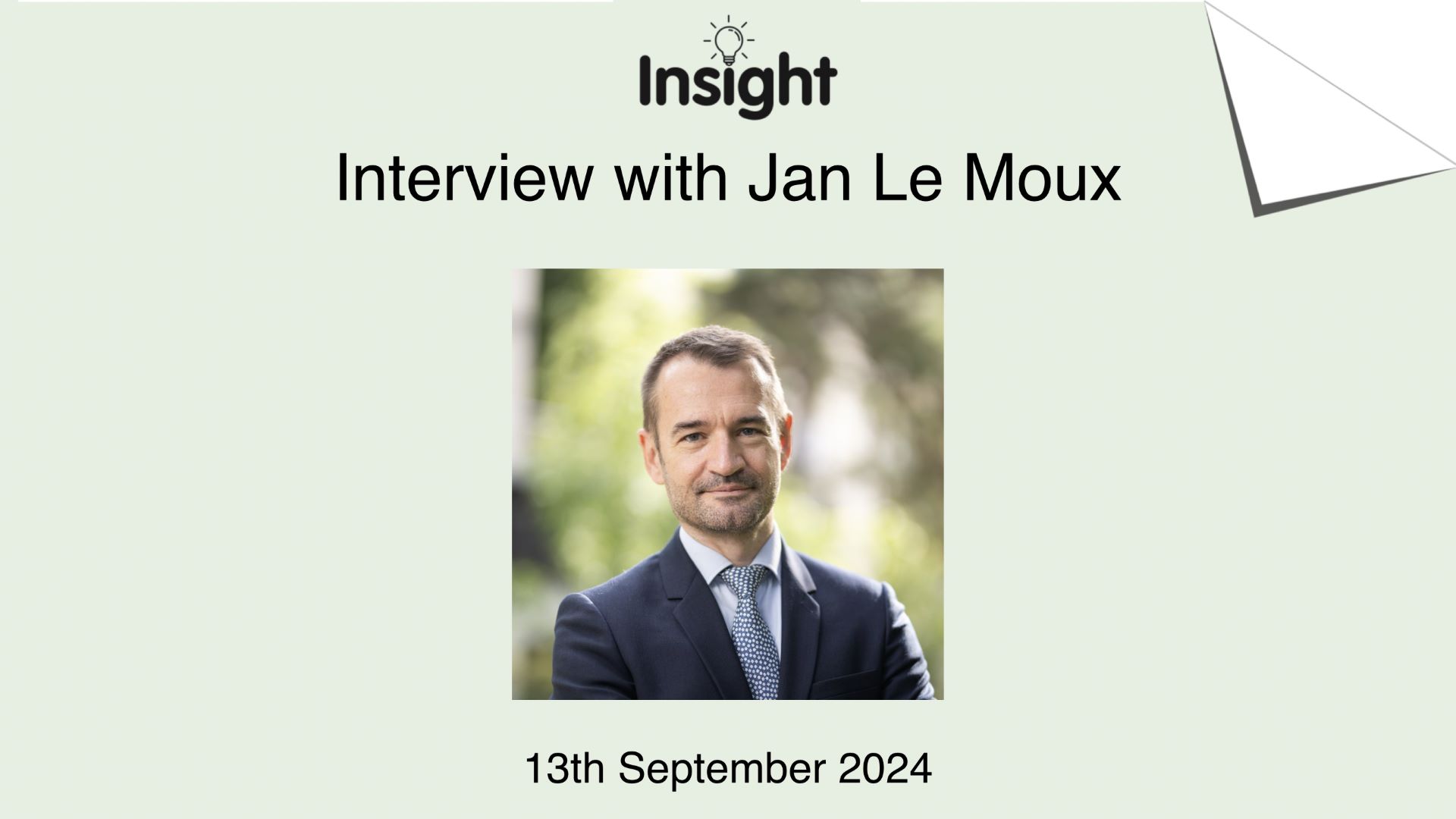
Ian Bates, Marketing and Partnership Director for Two Sides interviewed Jan Le Moux, Director General, Revipac, Circular Economy Director, Copacel & Campaign Lead, Two Sides France.
“I would like to welcome Jan Le Moux, to the Two Sides Insight interviews. Jan, it’s a pleasure to welcome you today. By way of a brief introduction, for those that don’t already know Jan…
He is an engineer of AgroParisTech. He lived 2 years in Germany, before joining the environment and sustainable development consultancy team of Ernst & Young in 2000. He worked there on behalf of private clients (especially for the energy and utilities sector) and also public clients.
He joined Citeo (previously Eco-Emballages) in 2010 to supervise activities related to eco-design and CSR of household packaging, then supervise the functioning of recycling markets. He was a director of the National Packaging Council.
He is now Director of Circular Economy for COPACEL, the French professional federation of the paper and cardboard industry and leads Two Sides’ campaign in France.”
Questions Asked:
What are the main challenges facing the French paper and paper packaging sectors today?
“There are two types of challenges.
The first is a general challenge, not specific to France: more and more companies or administrations want to force a paperless relationship with their clients or citizens, claiming digital is more practical and better for the environment. This is not supported by facts nor the experience of people, but the myths associated with paper are very strong.
The second is specific to France. Paper is subject to increasingly stringent and often unjustified environmental regulations, despite its excellent performance in terms of the circular economy.
This leads to a decrease in the use and production of paper.
Luckily, public authorities and the general public are becoming increasingly concerned about digital technology, and the digital pollution is being questioned. Decision-makers now need to realise that paper is a responsible alternative to a supposedly sustainable digital world.”
There are significant changes in legislation underway, which could impact the paper sector – particular for door drop media. Can you please elaborate?
“A number of environmental laws have been passed in recent years. Each time, a particular use of paper has been targeted. Each time, there has been no serious impact study, and the same mistake has been made: the legislator imagined that there would be less paper, and therefore less pollution. In reality, the opposite always happens: people still need to communicate, so they’re switching to digital. Recent studies show that its pollution is higher and increasing, but it is unfortunately invisible to the citizen.
This is the case for invoices, with the obligation for companies to switch to electronic invoicing. It’s the case with advertising, with a trial aimed at reducing the distribution of door drop advertising. This is also the case for paper receipts, which must be requested from retailers by the client.
On each occasion, the companies concerned have announced that they are going to develop digital alternatives, using misleading ecological arguments.
But Two Sides France asks those companies to prove their greenwash claims and has even lodged several complaints with the Advertising authority, and has won each time.”
Given your experience with advising clients about navigating the circular economy, what important roles does print and paper play given the increasing transition in some markets toward digital?
“Paper is a first class media in terms of sustainability and efficiency. It is well documented now that paper is easier to use, better for people to remember the information. It is also a fact that the environmental performance of paper is one of the best for all materials, being bio-based sustainably managed, produced from a majority of renewable energy sources, recyclable and largely recycled.
It is the role of Two Sides to make organisations aware of the error of their choice and the risk they are taking with their reputation, by making people believe digital is more practical and more ecological while the experience of their consumers is totally different, and studies document the explosion of digital pollution.”
We often hear that ‘going paperless’ and switching to digital is better for business and the environment. How true is this and can you shed any light on the facts, which will help people make well-informed decisions in the future?
“Marketing departments should update their perception of what they think is modern and practical. Every two years, Two Sides conducts a study showing that people find digital inconvenient, are concerned about how their data is used, and want to be given a choice at no extra cost. A company that takes this into account will improve its customers’ experience and its reputation, and will avoid exposing itself to the risk of greenwashing, which is now considered in France to be a misleading commercial practice punishable by heavy fines.”