ANZ
 Brazil
 American Latina
 France
 Germany
 Italy
 Portugal
 Nordics
 North America
 South Africa
 United Kingdom


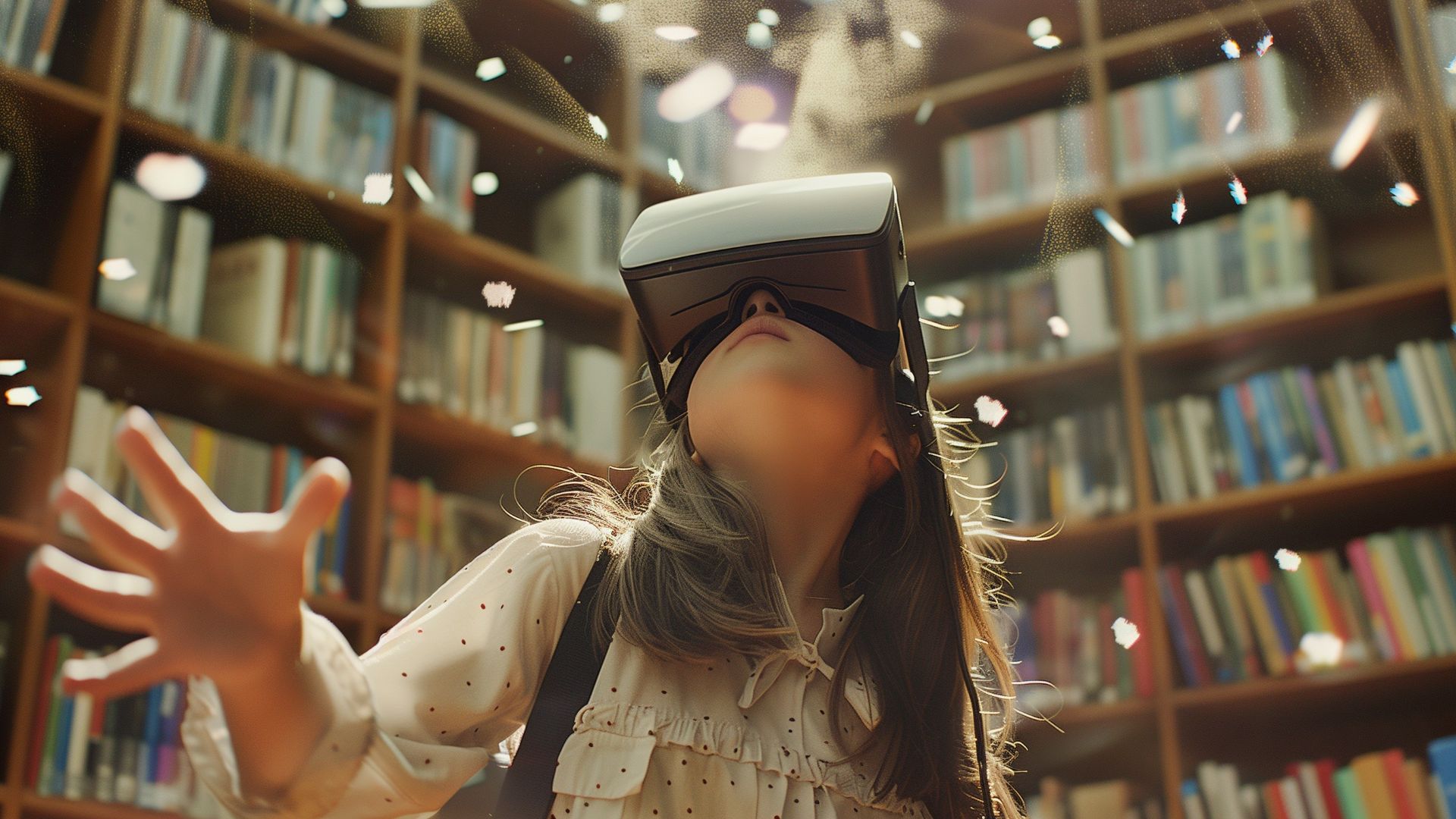
Has Singapore’s National Library Board created the future of reading print books?
As the world turns and technology develops, there haven’t been many areas of the entertainment industry that have remained unaffected by the online revolution. However, one activity that’s remained largely the same is reading. Of course, the publishing industry has been upended by the rise of the e-reader, but the core action of reading is the same as it was when the first symbols were carved into stone.
Now, it looks like reading is gaining extra dimensions with the addition of atmospheric sounds and complementary images – overlaid content that’s designed to engage with the reader at the exact time they read a connected part of a book. Creaking doors, background chatter, suspenseful music, shifting lights, linked animations, all could be available to the reluctant reader to boost their enjoyment of reading and increase their desire to pick up a book.
A Gateway To Reading
The world’s first augmented reading experience will be found at Singapore’s National Library, which has developed the technology using Snap Spectacles, which add digital content to real-world vision. Looking like a large pair of sunglasses, the Spectacles scan a book while the wearer is reading it and uses text recognition and machine learning to provide audio and visual effects. So if a scene in the book is a busy restaurant, the reader will hear the sounds of people talking and perhaps cutlery scraping against plates. They may even see what the main character is eating.
“Our goal is not to replace the traditional reading experience, but to enhance it by creating a compelling gateway to books,” said Stephan Schwarz, Executive Creative Director at LePub Singapore, the creative agency that developed the experience. “These glasses are an invitation to rediscover the joy of deep, meaningful engagement with text. Once people are hooked on the story, we hope they will keep reading to the end.”
The Art Of Imagination
You could argue that adding sounds and images to the experience of reading takes away one of the more enjoyable aspects of an activity that’s held the attention of trillions of people for thousands of years: imagination. The act of reading requires the reader to conjure up entire scenes in their heads, from how characters look and what’s around them, all the way to their accents and expressions, and even what they can see, hear, smell and touch.
But there’s an equal and opposite argument that says that the technology could attract non-readers to the act of reading, giving them a more immersive experience and the ability to immediately share their experience with millions of others. Going further, augmented reading could act as a pathway to more traditional reading, where the technology is set aside in favour of simply picking up a book and enjoying the story.
Whichever side of the argument you fall on, there’s an inevitability that technology will increase its grip on one of the last few remaining areas of entertainment it hasn’t been able to completely transform. As long as the choice between print and digital remains then encouraging more people to read can only be a good thing.
For more information on augmented reading, go to www.nlb.gov.sg