Brazil
 American Latina
 France
 Germany
 Italy
 Portugal
 North America
 United Kingdom
 Finnish
 Norway
 Polish
 South Africa
 Swedish
 Spanish
 Czech


In an era when mental health awareness is at an all-time high, brands are discovering that packaging offers more than just a way to transport products safely. From encouraging difficult conversations to connecting people with support groups, innovative packaging is helping to make people feel better about themselves and tackle difficult health issues.
Emotional Rescue
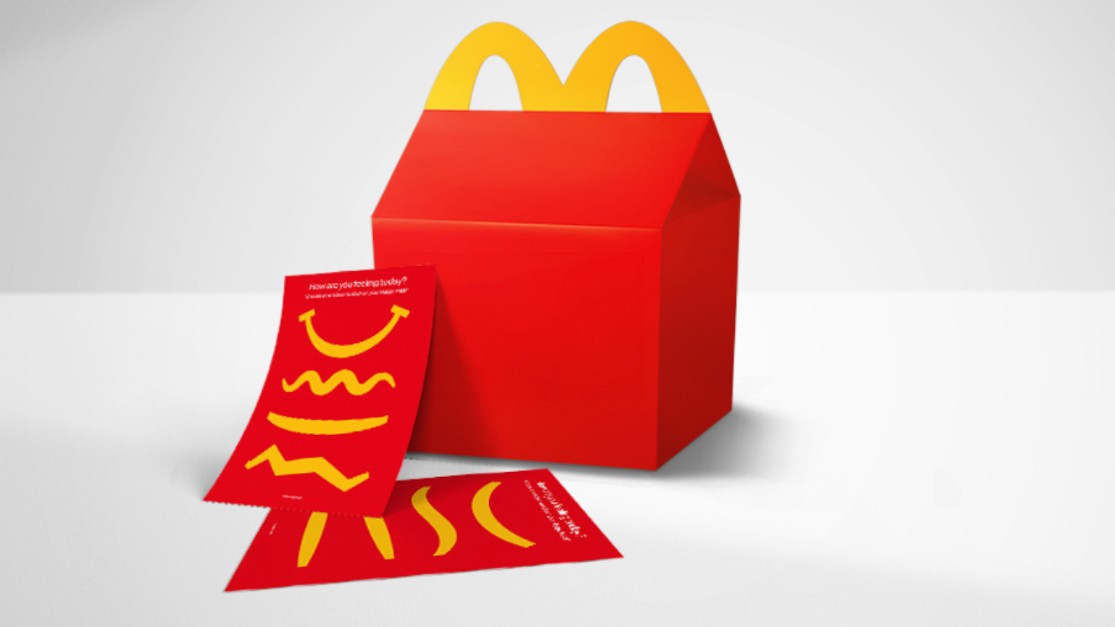
In May 2024, McDonald’s took the unexpected step of removing the iconic smile from millions of Happy Meal boxes during Mental Health Awareness Week, communicating to children that it’s OK not to feel happy all the time. This campaign responded to research showing that nearly half of UK children feel pressure to maintain happiness constantly, even when they don’t want to. The boxes also included stickers showing different emotions, allowing children to show their genuine feelings by putting the stickers directly on the packaging.
Then, in November 2025, McDonald’s took the idea further by launching Happy Meal boxes that were completely blank, creating a canvas for young consumers to express their feelings through art. Research commissioned by McDonald’s found that 42% of UK children aged five to ten struggle to discuss their feelings with adults, yet 73% feel more comfortable discussing emotions while drawing.
Conversation Starters
Another example of packaging encouraging people to talk about their problems came in the form of crisp packets produced by Beavertown. The UK brewery partnered with the Campaign Against Living Miserably (CALM) to print messages about mental health printed on the inside of the packets, which were designed to start conversations about personal problems. Available at over 260 pubs across the UK, this ‘Open Up’ campaign was a response to research that showed that 56% of people in the UK avoid discussing their mental health by pretending to be OK.
Supporting New Parents
One group of people that are particularly susceptible to mental health problems are new parents, so Aldi partnered with PANDAS Foundation to print mental health messaging on its Mamia Sensitive and Extra Sensitive baby wipes packaging. PANDAS is a UK charity that offers support for families and who may be suffering with perinatal mental illness, including prenatal and postnatal depression.
“This campaign brings together two powerful things: empathy and visibility,” said Annie Belasco, CEO of Pandas Foundation. “So many parents are struggling in silence, and this puts a message of hope directly into their hands.”
The baby wipes packaging provides a list of the common signs of perinatal mental illness, such as low mood, anxiety and tearfulness, while directing parents to helplines and support groups. This campaign follows research that revealed that three in four new parents struggle with mental health during or after pregnancy, yet only 17% access specialist support. By placing this information on a product that parents use regularly, Aldi aims to provide comfort and connection to parents who need reassurance that they are not alone.
Right Place, Right Time
All these examples demonstrate that packaging can offer much more than its traditional role, providing a space for brands and support services to provide vital messages about mental health, reaching them in their everyday lives, when they are eating, socialising or looking after their family. Not only that, but having that message repeated on packaging can begin to normalise the problem and make it easier to tackle.