ANZ
 Brazil
 American Latina
 France
 Germany
 Italy
 Portugal
 Nordics
 North America
 South Africa
 United Kingdom


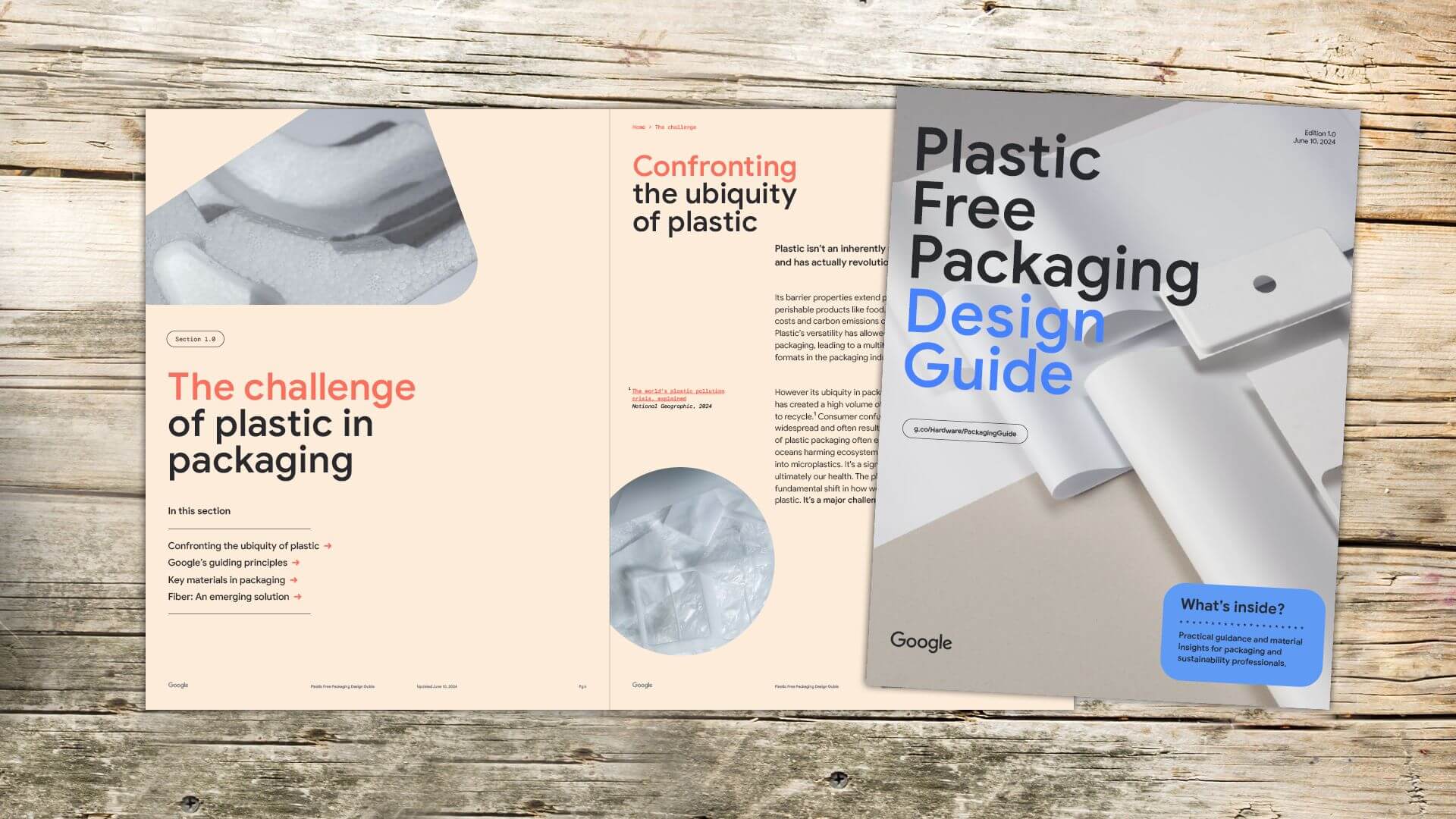
Why the global tech giant created a manual for switching to paper packaging.
For most people, the purchase of a new phone is an exciting prospect. Setting it up, exploring its features, trying it out – hours of pleasure for the smartphone fan. But before all that there’s the thrill of opening the various stages of packaging, all designed to add to the new-phone experience.
Every technology company understands the importance of unboxing, with the same companies under increasing pressure to be sustainable. However, maintaining equal levels of security, protection and style in every aspect of the packaging presents a huge challenge.
But with the release of its new Pixel 8 smartphone, Google has not only achieved it but released a guide to show other companies how they did it.
A Three-Year Process
For a company such as Google, eliminating plastic from its smartphone packaging wasn’t an easy task, with its previous packaging containing seven key elements made from plastic, including shrink wrap, film coating, closure labels, tapes, trays, hang tabs and product wraps. In total, the entire process of swapping plastic for fibre-based materials took the company three years to complete.
Within those three years, a team made up of designers, materials scientists and environmental experts worked together to take each element in turn and create the ideal plastic-free solution. One piece of the packaging swap that needed a lot of investigation was the plastic tape that reinforced the corners of the boxes for strength. The paper alternative needed to be equally strong, perform well in its suppliers’ machines and be easily recycled.
“Finding a paper tape that met our strength and repulpability requirements involved extensive testing and collaboration with multiple vendors,” said Miguel Arevalo, Google’s Packaging Sustainability Lead. “We ultimately partnered with those who could provide the technical expertise and manufacturing capabilities needed to bring our vision to life.”
Sustainable Solutions
Titled ‘Plastic-Free Packaging Design Guide’, the free Google document goes through each element of its Pixel 8 packaging, explaining the challenges of transitioning to a fibre-based solution as well as the solution, before sharing its insights into how other companies could repeat the process.
For example, the in-box tray that protects the phone inside the outer packaging box required a large number of tests, from how it protects the phone to how it works at suppliers’ plants. The solution was a moulded fibre tray that could be shaped around the phone while offering a nicer feel for customers. “While thermoformed plastic trays have their merits, we found that moulded fibre offers comparable protection with the added benefits of recyclability and a more natural aesthetic,” said Rob Cook, Packaging Design Engineer Lead.
Knowledge Sharing
The entire purpose of Google’s design guide is to open up the possibility of making complex packaging plastic-free for other, smaller companies. While many brands would rather keep their packaging R&D work to themselves, Google have taken the positive step of sharing their knowledge to “use what we’ve learned on our packaging journey so far and promote industry collaboration and innovation.”
Whether you are a global brand or an SME, there’s plenty to learn from this sizable document and it sets a precedent that many other companies would do well to follow.
To download the Google Plastic-Free Packaging Design Guide, go to bit.ly/Google-Guide