Brazil
 American Latina
 France
 Germany
 Italy
 Portugal
 North America
 United Kingdom
 Finnish
 Norway
 Polish
 South Africa
 Swedish
 Spanish
 Czech


Two Sides’ annual conference delivered a fascinating array of voices, opinions and forecasts, providing a highly effective overview of the current world of print, packaging and sustainability.
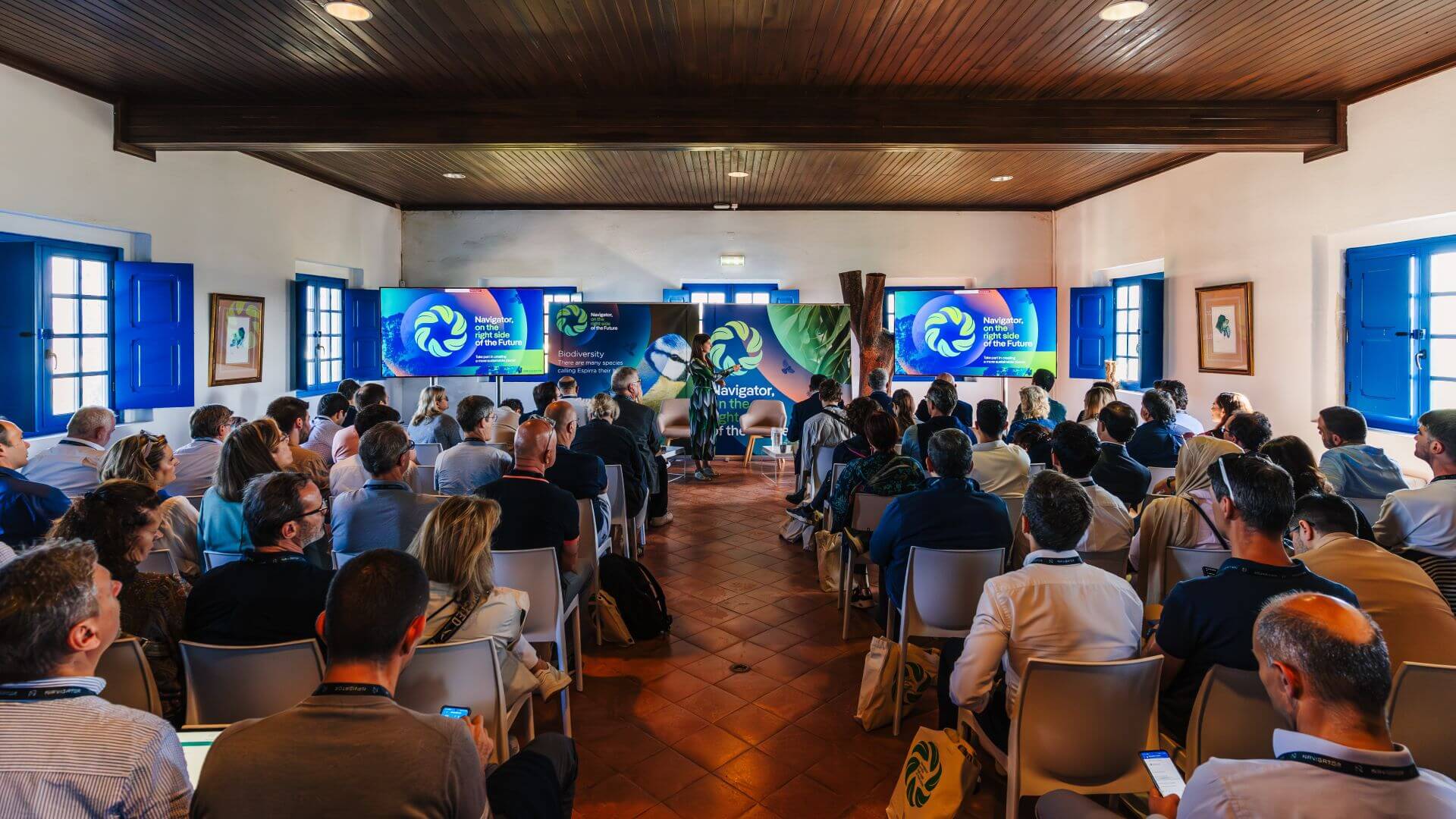
For some people, 5 November 2024 means fireworks; for others it means a certain transatlantic election. But for the print, paper and packaging industry, attention turns to the annual Two Sides Power of Print Seminar. Held once again at Stationers’ Hall near St. Paul’s Cathedral in London, the event offered a fascinating mix of industry experts, brand owners, environmentalists and creative gurus, all giving their thoughts and opinions on the value of print and packaging in an increasingly online world.
The Facts Of (Print) Life
With around 150 delegates settled in their seats, Charles Jarrold, Chief Executive Officer of BPIF, stepped up to deliver the latest facts and figures about the print industry and what to expect for 2025. The headline news is that total UK turnover is expected to rise to £13.7bn from £13.3bn in 2023. While there’s been a steady decline in advertising, packaging has risen, leading to a strong improvement in confidence during Q3 2024.
The BPIF’s latest figures also reflect the industry’s reputation sustainability, with 82% of companies actively reducing their carbon footprint and 75% measuring their carbon footprint. Summing up, Jarrold stated: “The industry is positioned for considerable change as it shifts from high-volume traditional printing to versatile, sustainable and digitally integrated solutions.”
The future was also on the mind of Mathew Faulkner, EMEA Director, Marketing and Innovation, Wide Format Printing Group at Canon Europe. Faulkner provided a series of insights into a report Canon are looking to publish in 2025, which poses key questions about consumerism to a series of futurologists.
One of those futurologists was Benjamin Talin, CEO of MoreThanDigital, who identified a number of trends we’re likely to see over the coming years. Those trends include ‘Identity and status’, which sees younger consumers being even more flexible about their loyalty to brands, and ‘The shift to virtuality’, which involves people becoming increasingly disconnected from the physical world.
What this means for print and its role in marketing is a shifting of focus to the point of sale. According to Talin, this is “print’s most valuable asset” and success will be “about monetising that control of attention.”
Creatives Love Print
Next up was Justin Cairns, Head of Offline Production at Ogilvy UK, and someone who’s very close to the creative process at one of the world’s biggest ad agencies. As the person the oversees the production of “everything you can touch” at the agency, Cairns used a series of case studies to demonstrate just how effective print can be, including campaigns for Dulux Heritage paint, what3words and Hellmann’s Mayonnaise.
Alongside the case studies, Justin also ran a video of a presentation by Ogilvy UK Vice Chairman and recent TikTok star Rory Sutherland on why messages on print have a greater perceived value than those on digital, and why copywriters and designers prefer to work on print campaigns. “Creatives love working in print,” he said. “They relish time away from their screens and winning an award for a print campaign feels very special.”
Rachel Aldighieri, Managing Director of the Data & Marketing Association (DMA), then went deeper into one particular print medium, direct mail, using insights from the DMA’s Effectiveness Databank. Through a series of comparisons between business effects (profit, sales, market share, etc.) and campaign effects (reach, frequency, clicks, etc.) Aldighieri showed that focusing on business effects made campaigns a lot more effective.
Going further, she demonstrated that highly creative campaigns provide up to four times more effectiveness. “So marketers should harness the power of creativity to learn what works for your brand,” she summed up. “And deploy the power of print to unlock the value of measurement and creativity.”
Getting Personal
One of the treats for the sweet-toothed delegates at the 2024 Power of Print seminar was a personalised bar of Tony’s Chocolonely, and right before lunch, the Dutch company’s Sales Manager Keshini Dodhia took to the stage to explain the allure of personalised packaging – especially when it comes with a bar of chocolate inside.
With 6.8bn kg of chocolate being consumed around the world every year, the brand is in a highly competitive market but sets itself apart by its ethical practices of supporting cocoa bean farmers, reducing exploitation, paying a higher price for beans and focusing on quality. Alongside its hugely successful range of chocolate bars, the company now offers a personalised service for companies and individuals, a service that’s increasing in popularity thanks to the trend of packaging personalisation.
Following Dodhia’s appetite-whetting presentation, the founder and owner of packaging research company NOA, Neil Osment, gave some facts about the current prospects for folding carton and corrugated packaging, as well as the opportunity for plastic replacement. The key takeaway was that forecasts for folding carton and corrugated packaging were both good over the next three years, with 2025 being the year the paper-based packaging industry would return to normal after a period of turbulence.
Staying with packaging, James Pryor, the Co-Founder and Managing Partner of structural packaging and product innovation agency Touch, explored the importance of sustainable packaging in a circular economy. His vision for packaging over the next 30 years was for it to “fit seamlessly into a more connected world, work for a broader, larger population and give back to the planet.”
To achieve this, packaging will need to adapt in a number of ways, including being regenerative rather than recycled to make a positive contribution to the environment. Examples of this include bottles made from carbon emissions and carbon capture vending machines. “The next decade will see us lay the foundations for a thriving circular economy,” concluded Pryor, “and future changes in society will mean that by 2050, the purpose of our industry will evolve.”
Global Collapse
“We have wasted a lot of time.” It’s fair to say that Jonathan Porritt doesn’t mince his words. The highly respected sustainability writer and campaigner has been warning the world about the threats from climate change for decades, and he seems just as passionate as when he started in the 1970s.
Highly sceptical about the COP29 summit in Azerbaijan (“It will achieve absolutely nothing”), Porritt proceeded to reel off a series of climate catastrophes that will result in forests being decimated and diseases increasing. If that wasn’t enough, the frequency and intensity of severe weather events will bring the insurance industry to its knees and the world to the brink of economic collapse. “Only then,” he said, “will the world do something about the environment.”
For Jonathan, there are bright spots on the horizon in the form of innovation. One example is engineered wood that has the potential to revolutionise the construction industry. But without a concerted global effort, such innovations may not make much of a difference.
The person with the unenviable task of following Porritt was Elin Furelid, Director of Future Packaging at The Absolut Company. But if anything was going to get the world through the next 30 years then vodka’s a good start. Furelid is responsible for driving innovation for Absolut Vodka, Sweden’s largest food export, and she took the audience through Absolut’s journey to develop a paper bottle for the spirit.
Following a lengthy development process and consumer testing at a variety of events of festivals, the bottle was trialled at 22 Tesco stores in Manchester. “We trialled 3,500 bottles in Manchester and received some fantastic feedback,” said Furelid. “One of my favourite comments was ‘If I take two bottles to work, they don’t clink!’”
Two Sides In 2025
Finally, Jonathan Tame, rounded off the day with an update on the work of Two Sides and a look towards 2025. One of the key events of next year will be Love Paper Week on 3-7 February. This global initiative will be a chance for the industry to champion paper, sustainability and attractiveness to consumers and businesses. Then there will be the new industry campaign Print Green designed to encourage printers to further increase their sustainability. And, of course, there will be the 2025 Two Sides Power of Print Seminar, which is already booked for Tuesday 4 November. See you there!
To listen to all speakers and view their presentations, go to twosides.info/power-of-print-2024