Brazil
 American Latina
 France
 Germany
 Italy
 Portugal
 North America
 United Kingdom
 Finnish
 Norway
 Polish
 South Africa
 Swedish
 Spanish


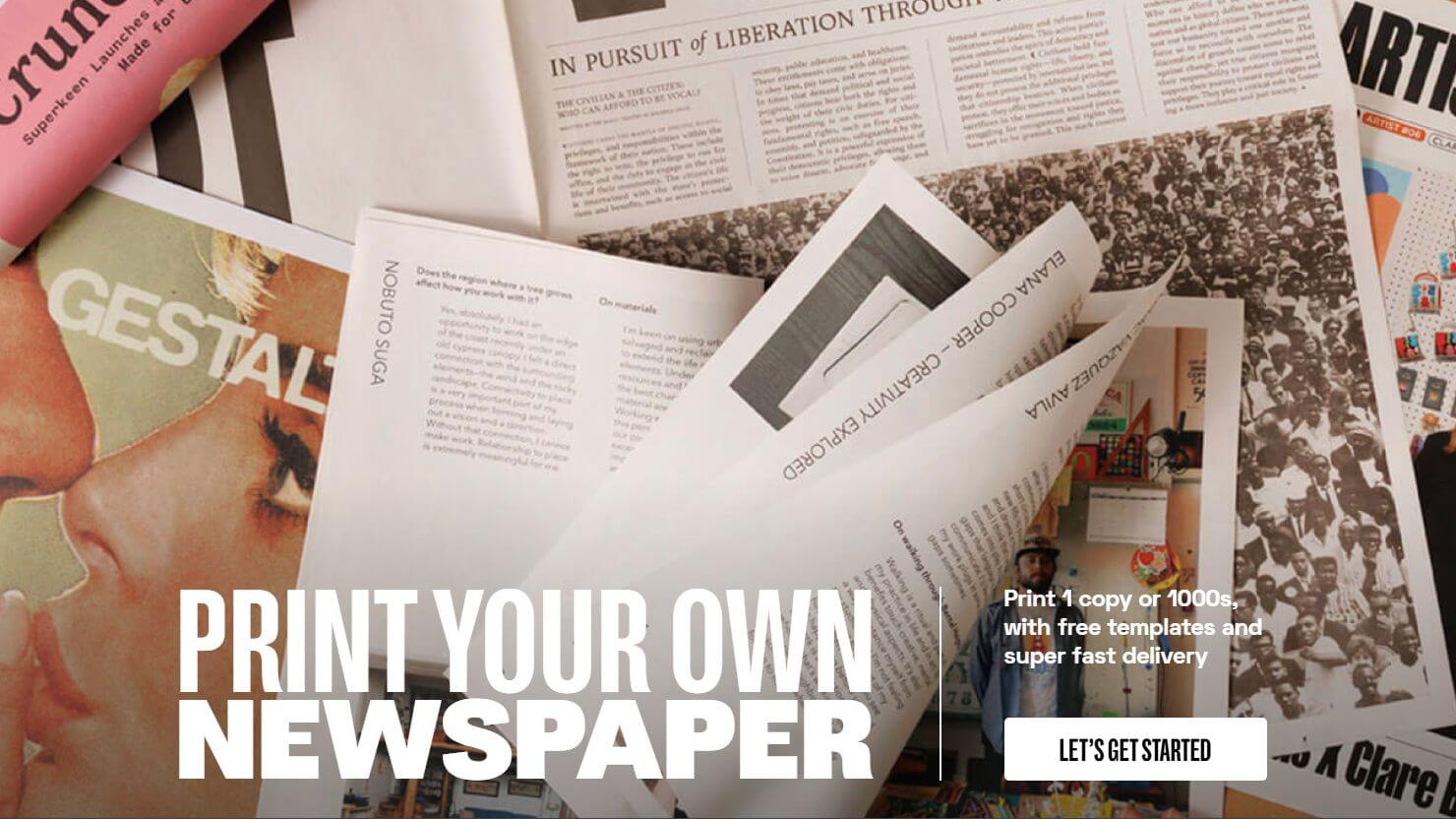
In a world dictated by screens, where portfolios and creative projects live almost exclusively online, the launch of Newspaper Club’s new midi (medium-sized) format feels like a fresh and exciting endeavour: a sustainable and affordable way for people to get their work ‘off the screen’ and into a physical form.
Its introduction reflects a growing cultural shift rooted in digital fatigue: a renewed appreciation for tactile creativity, and a wider recognition that responsibly sourced paper can be an environmentally conscious medium. It offers a perfect example of how print can thrive in a digital-first world when it prioritises sustainability and creativity.
The midi is a compact newspaper format, slightly bigger than A4, sitting neatly between a brochure and a magazine. With the option to print between 16 and 64 pages, it’s designed to suit a wide variety of creative uses. What makes it particularly noteworthy is its accessibility: unlike traditional magazine printing, which often requires high minimum orders and complex production setups, the midi can be printed in quantities as low as a single copy. That means students, freelancers, artists, photographers, illustrators, and small studios can experiment with print without financial risk. This low-barrier approach opens up print to people who might have viewed it as too expensive or logistically challenging.
The user-friendliness of the midi feeds directly into its appeal. Newspaper Club has released templates compatible with Adobe InDesign and Canva, allowing creators to design their publication without needing specialist print knowledge. The aim is to make print as easy as possible for people who typically work digitally. This convenience is perfectly timed: many creatives are feeling burnt out from the constant pace of online creation and consumption. Spending time crafting what will turn into a physical object can be grounding, offering a slower, more thoughtful way to present work. The act of designing for print encourages deliberation: a contrast to the fast-paced, disposable nature of digital content.
For audiences experiencing this digital fatigue, printed formats provide a welcome alternative. Paper commands a different kind of attention. There are no notifications or blue light, and no algorithm deciding what comes next. A printed portfolio or mini magazine invites the reader to slow down: turning pages and engaging with the work in a more mindful way. This is a big part of why physical publications are experiencing a resurgence across the creative industries. The midi taps directly into this movement, providing a sustainable and practical route back to print.
This sustainability element matters enormously. Newspaper Club prints the format exclusively on FSC-certified papers, including a light newsprint stock and an 80gsm recycled option designed for crisp images and vibrant colour reproduction. FSC certification ensures materials come from forests managed to high environmental and ethical standards, and the recycled paper option extends the life cycle of wood fibres by keeping them in use for longer. Because Newspaper Club prints on demand, creators only produce the number of copies they genuinely need, eliminating the excess waste typical in traditional bulk print orders.
These features help counter a common misconception: that digital is always more sustainable than print. While screens may be ‘paperless,’ they rely on energy-intensive servers, finite raw materials, and continuous power. Printed items made from responsibly sourced or recycled paper, by contrast, come from renewable resources and require no further inputs once produced. They can be stored, shared, archived, or displayed for decades. For creatives considering environmental impact alongside artistic value, this balance makes small-scale, sustainable printing an increasingly attractive option.
What the midi truly represents is a democratisation of print. Historically, producing a physical publication required either a large budget or industry connections. Independent creators often turn to zines as a workaround, embracing their DIY aesthetic. The midi bridges the gap: it offers the approachability of zine culture with the polish of professional production.
And this hybrid identity makes it versatile right across the creative spectrum. A photographer can create a sequenced portfolio; a designer can build a lookbook; a writer can print a short-run sampler of a larger work; an illustrator can turn digital art into a collectible booklet. Without high minimum orders or expensive setup stages, creators gain (important) permission to experiment.
Seeing work in print can also change how creators understand their own projects. Colours often behave differently on paper than on backlit screens, and typography suddenly becomes much more intentional. These small differences frequently reveal new layers in a project that were invisible digitally. Many artists describe holding their first printed copy as a transformative moment, one that brings a renewed sense of ownership over their work.
For readers, the appeal is equally strong. In a culture of endless scrolling, printed materials feel refreshing. They encourage deeper engagement and offer a break from the constant noise of digital environments. This emotional pull isn’t purely nostalgic; it’s connected to the way our brains process physical media. Studies have shown that reading on paper can improve retention, reduce cognitive load, and promote calm. Paper invites focus. The midi, as a light, compact, beautifully printed format, fits naturally into this shift toward slower, offline experiences.
The wider design community’s enthusiasm for the midi signals something important: print is not disappearing. Instead, it’s evolving. Instead of competing with digital tools, it exists alongside them, offering a complementary experience. Digital platforms allow creators to share their work widely, but print gives that work physical presence and permanence.
Newspaper Club’s new format bridges this divide, proving that print can adapt simultaneously to modern workflows, environmental expectations and creative needs, all without losing its unique appeal.
Interested in printing your own midi-zine? Find out more about Newspaper Club here: newspaperclub.com